Keeping Faith in Dragon Age: Inquisition, Part Two: a question raised, perhaps answered.

So, continuing on from last week, there is a god and its name is Bioware. At least as far the world within Dragon Age: Inquisition (and the other titles made by this particular developer) is concerned. What does this mean?

At a glance, not a lot. On one hand, academically, the idea of audience participation as an act of ritual or faith is not a new one, nor is the idea of art creator as god of that particular work. Just look at the cultural treatment of the Star Wars franchise and George Lucas’ role over it. I once heard the Original Trilogy compared to the Qur’an and the Extended Universe and Sequel Trilogy compared to the Hadiths. Not the best analogy in the world, but not the worst either. On the less academic hand, as I said last week, we tend to spend most of that glance slaying bears, wolves, demons and dragons. ‘Cause slaying dragons is fuckin’ wonderful.
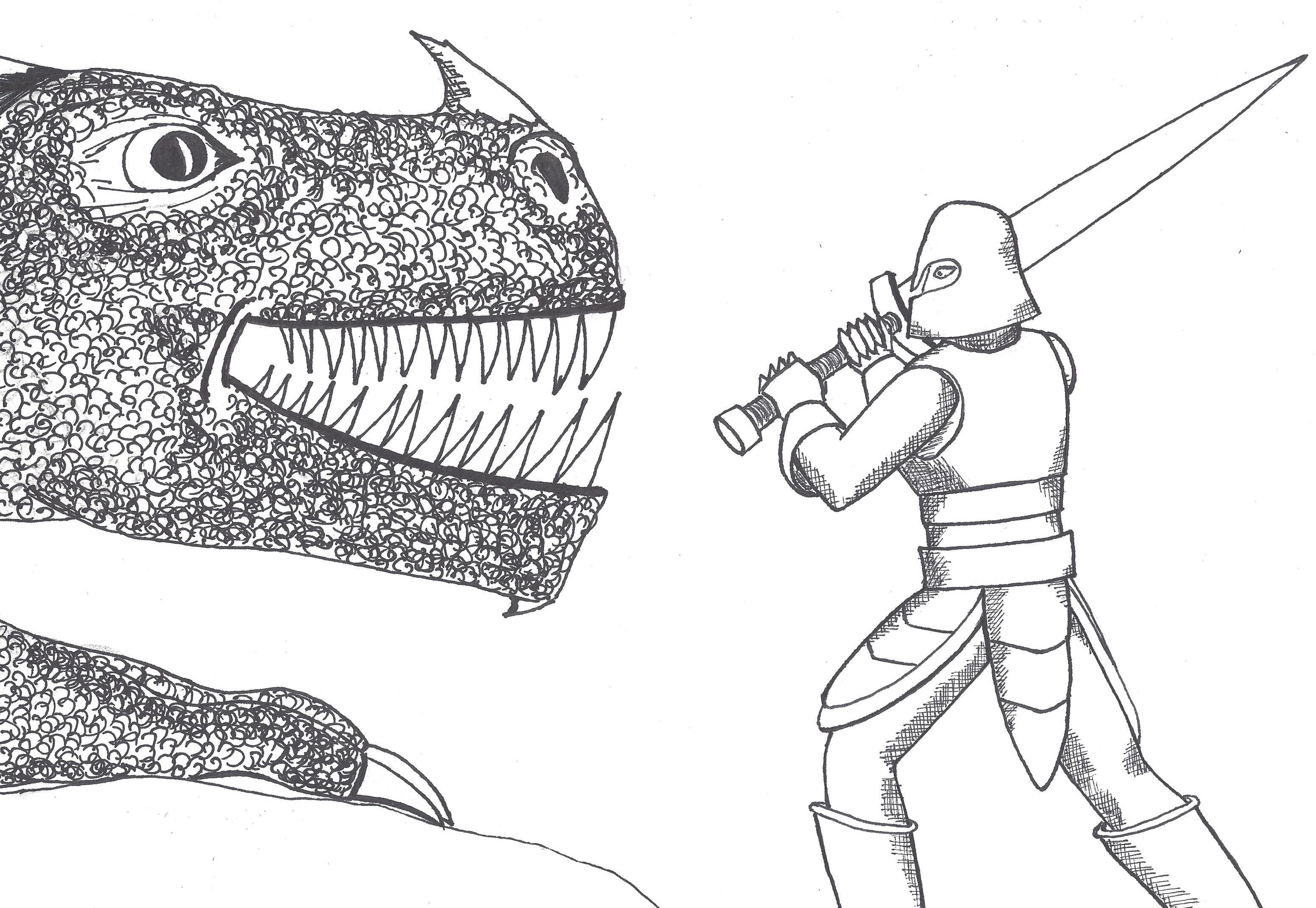
The Inquisitor did raise her mighty sword, and with a lion-hearted roar did issue her challenge, "Come at me bro!" And lo, the dragon came at her.
The Inquisitor did raise her mighty sword, and with a lion-hearted roar did issue her challenge, “Come at me bro!”
And lo, the dragon came at her.

But one of the things I’ve loved about DA:I‘s portrayal of belief has been the subversive* way that it compares the faith of its characters in the guiding hand of “the Maker” with the faith of gamers in the guiding hand of the developers. Let’s think about it this way: there are certain expectations that we as audience and participants have of the media that we consume, and we have faith that these expectations will be met. Within the above mentioned passive media these expectations can be as simple as expecting action in an action movie, singing and dancing in a Bollywood film, and spectacularly shot images meant to convey how depressing and meaningless humanity really is in anything by Lars von Trier. In superhero comics and cartoons we expect the villain to get away at the end of the episode (not least so the series can continue). In detective fiction we expect an answer as to “who’dunnit?” (even if we don’t always expect justice). When watching a horror movie we expect the protagonists (for want of better word) to do stupid things like split up, forget to charge their phones and generally not seek help from anyone useful so that the villain has the opportunity to pick them off in whatever gruesome manner they prefer. Our expectations are used by creators as shorthand to avoid lengthy and unnecessary exposition, and as tropes to drive the narrative forward. Video games have an additional layer of expectations laid on top of them, again often separated by genre and developer, in the form of mechanics.

In RPGs like DA:I (and other games by Bioware for that matter), we have certain expectations about how the mechanics will deliver the narrative. We expect an antagonist with impossible power and dreams of conquering/destroying the world. We expect a number of companion characters and allies who fill out certain archetypes and react accordingly to the story and the player’s decisions. We expect our avatar to either be given some power or weapon that for some reason is the only method of defeating the antagonist, or given the task of achieving/retrieving said weapon or power, through happenstance, destiny or the will of god. But Bioware’s writers were aware of this and used it to further drive the narrative.

Most self aware games, like most self aware media in my experience, tend to be examples of satire, mockery, or (at their artistic best) deconstruction. Horror films have Scream. Video games have the Saints Row franchise, which revels in the inherent ridiculousness inherent in common video game tropes with a straight face and the occasional knowing wink. Or Sunset Overdrive, which openly points out and laughs at the flaws of video game logic. DA:I isn’t satire, and I wouldn’t call it a deconstruction without some serious mental gymnastics, but it is fairly self-aware. Your avatar is given a mark, ‘the anchor’, right at the beginning of the game, that is the only threat to the game’s villain. Even when you learn that the anchor is just old magic, and that the reason it fused with you was simple accident and happenstance, the characters most defined by their faith (such as Cassandra) point out how convenient it was that you just happened to be in the exact right spot at the exact right time to become exactly what was needed. So convenient that it’s not a particularly difficult leap to assume that some divine planning was in play. Because it was.

I know I’m starting to sound repetitive right now, but I can’t stress the fact enough. The writers planned every twist, every coincidence and the consequences of every choice. The lore, the history, the rules, the science of the world. The artists designed and drew, the programmers made it a virtual reality. No matter the details of my character’s history that I’ve ‘headcanoned’ it is still limited by the decisions and narrative given by the game’s designers. Her destiny is still predetermined. We, the players, know that. We have faith in that. So when the characters and story appeals to our character’s faith in a fictional god or religion, they are in fact appealing to the player’s faith in the game. Exhausted and wounded (spoiler alert) after your first encounter with the game’s antagonist, the Elder One, your army defeated and your camp at Haven destroyed, the character Mother Giselle tells your character to have faith that all is not lost, to have faith that things will get better. She is also telling you, the player, to have faith in the game and its designers. Of course they aren’t going to end it there, of course you’re going to get stronger and wiser and ultimately defeat the villain of the piece. That’s how linear video game story mechanics work.

So, again, what does this mean? It makes the game’s narrative more compelling, whether we roleplay a religious character or not, since it compares our faith in the game with the faith of the NPCs driving the narrative. It makes the characters and their struggles more relatable, since their faith in the Maker’s plan is reflected by our own. It makes for a strong, compelling story that explores themes like the place of institutionalised religion in politics and power, race relations, and, of course faith, with confidence that everyone understands exactly what they’re trying to get across.

If I can string together a coherent post on the subject, there might be a part three next week.


*I’ve been trying to cut down on using that word, but I can’t think of a better one at this exact moment.

Keeping faith in Dragon Age: Inquisition, Part one: Let me frame the discussion

How would you react if you knew for certain that god existed? Or destiny? Let’s say a god that doesn’t care whether you’re moral or immoral, faithful or unfaithful, sing its praises or curse its name, you’ve received its mark regardless and you have a destiny in front of you. Would you piously tell anyone who asked or listened about your knowledge and faith? Would you simply shrug your shoulders and give an inconclusive, agnostic non-answer? Or would you loudly tout your ‘atheism’, laughing behind your eyes at those that agree or disagree alike? It’s a question that comes up often in Role Playing Games (RPGs) like Dragon Age: Inquisition. It’s part of the fun though we rarely put it that way, at least partly because over-thinking the philosophical implications of such a decision takes up time that could be better spent slaying cultists, giants and dragons. I do love slaying dragons.

DA-I Lana drawing 1 edited
“Right, who’s next?”

Faith is a key theme running throughout the game, being a major motivating factor for many of the main characters (unsurprising given that the Inquisition of the title is an offshoot of the world’s major religious institution populated primarily by the faithful). Cassandra is a holy warrior whose faith in her god (the Maker) is strong, but her faith in his Chantry is shaken. Leliana struggles to reconcile her belief (so strong in Dragon Age: Origins) in a loving Maker with the fact that he has allowed so much chaos and destruction loose on those loyal to him (including the death of her friend and mentor, the Divine). The Iron Bull’s faith in the Qun is already shaken before he meets the Inquisitor from having lived outside of its teachings for so long, and if certain choices are made he doubts his own ability to keep from becoming a mindless savage without it, losing faith in himself. Sera, Varric and Dorian’s lack of faith in the old institutions of their respective governments, class systems and religions drove them to join and remain with the Inquisition, a catalyst of change, but their views and certainties of the world are rocked by the truths revealed by the identity of the game’s overarching antagonist (effectively a powerful mage who became Satan). The player character him or herself spends what can be defined as the extended prologue with everyone assuming he/she was personally saved from a cataclysmic death by blessed Andraste, god’s missus. Even after we find out that the glowing green mark on our avatar’s hand is due to magic and coincidence rather than overt divine intervention many of our followers make the rather valid point that covert divine intervention is not ruled out, since you just happen to be exactly what is needed when it is needed. Several outright ask the player what they believe is on their hand and what they believe exists in the DA:I equivalent of heaven. How the player responds to this is up to them.

The first thing you do in DA:I is pick your race (elf, human, dwarf, Qunari), your class (warrior, rogue or mage) and your appearance. You are given the barest outline of a personal history to explain how you happen to be at the centre of a magically exploding temple. It is assumed you either know the game world’s law or will be paying close attention to the codex entries you find. After that, it’s up to you to decide the personality of your avatar, your Inquisitor, how they act and react, how they get along with the other characters in the game, and what they believe. The characters are left purposely blank for this exact reason, so that the player can fill in the spaces.

Take my Inquisitor pictured above (badly, I stuffed up the shadowing and drew the eyes too high, but that is why we practice). Lana is a Dalish elf warrior who prefers swords to axes, and axes to hammers or mauls. She has a scar over her left eye from a fight with a Tal-Vashoth bandit in which she almost lost it. She generally tries to get along with people, but her attempts at diplomacy often come off as clumsy or ill-thought, not helped by the fact she has a fierce temper with little mercy for those that cross her. Regardless Lana gets along with her companions well enough. There were a few tensions initially with Dorian, the Tevinter mage, after a few ignorant comments got her Dalish blood boiling. She does her very best to stay on Sera’s good side, seeing the playful city elf as a sort of little sister. She does her very best to try and like Solas with his large head full of dreams, but finds his pseudo-intellectual condescension irritating. She finds some of Cole’s actions worrying, but appreciates good intentions. The two that she understands best however (at least at this point in the game), are Cassandra and Leliana, whose crises of faith perhaps best reflect her own as she struggles to reconcile her proud beliefs in the gods of the Dalish with what she has seen and been told about the circumstances of the mark on her hand (the anchor), which indicates at least some truth to the stories the Chantry tells about the Maker (who is perhaps not so different from the Dalish Creator god).

But that’s me filling in the blanks. Jump onto Tumblr or any other similar website and punch in the right search terms and you’re bound to see stories, comics, other fan-fiction and reviews where people have filled in their own. Some are militantly atheist, some are calmly agnostic, others have declared themselves arbiters of the Maker’s will.

Here’s the thing though: we as players know for a fact that god exists and has a plan for our characters. That god’s name is Bioware.

Happy New Year

Have you ever watched Sydney’s New Year’s Eve fireworks show? It’s a hell of a performance. The annual budget of a small Pacific nation is blown away over the course of around twenty minutes in a spectacular display of colour, thunder and light. The Harbour Bridge takes centre stage, its arch sometimes doubling or tripling in size as gouts of yellow, purple, red and green flame and smoke rise high into the night sky, while pontoons scattered across the water provide sideshows and back-up dancers to our main diva.

New Year’s Eve is a night that, regardless of the shit that’s gone on throughout the year, we remember that Sydney loves a party. The club lockout rules are relaxed a little, revellers surge through our streets, public transport struggles to move it all about, the atmosphere is alive and excited. Hopeful. I was so disappointed when my first NYE as an eighteen year old was down in Hobart instead of Sydney, visiting family. Getting plastered with my mates in the city was supposed to be a right of passage, and instead I was slightly buzzed at my Aunt’s friend’s place overlooking the comparatively pitiful Hobart fireworks. Two guys on a raft with a flare gun, I like to half-joke. Most of us just watched the Sydney fireworks on the TV. Mind you when I was eighteen I considered any remotely special occasion where there was an opportunity to get drunk as a right of passage. Eighteen year old me was a dumbarse. So was nineteen year old me, actually.

Mind you, it’s not like I’ve spent every year since getting trashed in the city beneath the fireworks. It’s a pain in the arse getting in and a bigger pain getting out. Last year I spent with the family and neighbours, year before that the guys came round to mine and we played poker all night. They came around again last night, though with a lot more alcohol and more ‘plus ones’ then that term usually implies. Was a lot of fun. There was an NYE where we made the trip to a spot called Blues Point, within kicking distance of the Bridge. We had to get there five hours early and fight for every inch of space against better prepared families who’d erect tents and barriers to guard and expand their territory. It was a dry area, and we expected them to put some effort into keeping alcohol out so we didn’t even try. All the drunken teenagers hanging around the public toilets proved how easy it could have been. The display was spectacular. Worth a five hour wait (six for my friends who arrived before the rest of us did)? Probably not. Worth being able to go to any other city in the world on NYE, let out a haughty, patronising chuckle and remark with absolute authority that “it’s nothing compared to a Sydney NYE display”? Absolutely. You could almost say that was the reason we were there. One of my friends was leaving for Nice (on exchange) not long after, and none of us had really gone to see those bright and tightly choreographed explosions we’re all so proud of before.

It’s all very ritualistic when you think about it. An annual sacrifice of material worth steeped in tradition, performed in front of millions of eyes, imbued with a socially-constructed sacredness, associated with drunkenness and revelry celebrating the death of the old and the beginning of the new, a communal prayer to the secular gods for a prosperous new year or at least a better one than the last. We’re nine condemned men hanging from a tree away from pleasing Odin. But I did a lot of Studies of Religion subjects at university, so that’s what I think about. The problems of the past year or burned away on a giant, kaleidoscopic funeral pyre, and we start fresh and anew. Today is a new day. Today is a new year. Thank Christ and consumer culture for that.

After all, how will 2014 be remembered? “A bit shit,” seems like an appropriately understated answer to that question. Ebola, IS (the caliphate formerly known as ISIS or ISIL) still going strong in Iraq and Syria, MH17 and MH370 (along with all the other planes that have gone down this year), a gunman in Ottawa, a gunman in Sydney, the situation in Ukraine, Ferguson and the resulting (completely justifiable) civil unrest, Gamergate and other attacks on feminism and women in our entertainment mediums. A bit shit. There were definitely joys to be had, 2014 gave us Guardians of the Galaxy after all, but I know I’m not gonna look back at this year too fondly. I may have spent a substantial part of this year going through depression (“may have” because I’m not a fan of self-diagnosis and get a bit rattled at the thought of getting a professional opinion). But that’s me, and any such judgement is entirely subjective. I couldn’t wait ‘til 2014 ended. You may have had a great year. I hope you had a great year. Seriously. I hope your next year is a lot better though. I hope mine is as well. I think it will be.

I’d like to say that writing this blog, for the two dozen or so of you that read it, has been a real joy. You’re all wonderful, intelligent, discerning and startling attractive people. I’ve been trying to maintain at least one post a week, but it’s been a bit difficult lately and will be a bit difficult in the future. I’m moving to Vancouver in a month and life has been busy. So bear with me, yeah?

Yeah. So that’s the barest outline of my plans for the new year, what’s yours? I hope they’re good. Keep the positive from last year, throw the negative onto the pyre, start the new year refreshed and ready. Welcome 2015, fuck off 2014.

And Happy New Year one and all.

Thanks for reading.

The sports of kings and gentlemen

I did two things for the first time this past weekend. On Saturday I put on a clean shirt and went to watch the horse racing at Randwick*, and on Sunday I went to my first cricket match, Australia vs South Africa at the SCG. While a good time was had at both, the cricket was by far the more interesting thing to watch (and there’s a statement I don’t reckon I’ll be repeating any time soon).

The funny thing about the sport of kings is that for such a classy affair the attendants are remarkably classless. Everyone dresses up in their fashionable finest. For a lot this translates to a nice suit (I rock a slightly dishevelled 30s mobster look, just saying) or designer dress with matching fascinator, for others translates roughly to club-wear (and for the alarming number of old white addicts in attendance whatever they normally wear around the house), the point being that most people put an effort into what they wear and how they look. The problem is that regardless of how much effort everyone puts in to fancy themselves up, there’s not a lot to do except drink. Seriously, most people at the track on race day are only going to be betting on the races at that particular track (not all the races going on simultaneously at other tracks) and placing a bet only takes between a few seconds and a few minutes. A race only takes about thirty seconds, after which you’ve got somewhere between half and a full hour ’til the next one.

"Gonna need more beer." "Yep."
“Gonna need more beer.”
“Yep.”

When a bunch of Aussies (and I expect this happens with other countries as well) get together on what looks and feels like an occasion and they have time to fill, they fill it with grog. So you end up with a bunch of guys in expensive blazers slurring about how weird it is that all the horses in the last race were brown (I mean, that’s really fucken weird ain’t it?) and girls stumbling barefoot over the grass, cheering on command and half wondering where the hell they left their bloody stilettos.

I’m not judging, mind you, I’ve been drunk in a suit too often before to judge (let he who is without sin and all that). Everyone was also pretty well behaved with most people at least looking sober beyond the odd knot of noticeably wasted friends, though that’s unsurprising given the very visible police presence and the high cost of alcohol (nine bucks for a bottle of Boags? Tell’im he’s dreaming). I will also reiterate that I had a good time, and mention that my mates and I didn’t actually drink that much (though for me the cost of getting drunk was the main obstacle … seriously, nine fucking dollars for a bottle of beer). I was just struck by how much effort we, the punters, put into trying to give a very dirty affair a veneer of respectability. Horse racing is still the sport of kings only because we keep calling it that instead of admitting that it long ago became the sport of drunken yobs in expensive clothes.

Going to watch the one day cricket match between Australia and South Africa was the far better experience, which actually surprised me a little bit. Y’see there’s a lot of things I’d describe myself as (“ruggedly handsome”, “intellectually gifted”, “short”) but “cricket fan” is not one of those. I’ve long been of the opinion that it’s “fun to play but boring to watch” (though it’s a good thing to have on in the background at a barbecue), an opinion that’s now been changed to “fun to play and watch live, boring to watch on TV.” Part of the reason is because the game seems much faster paced in person than it does on a screen, you can see all the activity on the field and realise just how fast a ball travelling at one hundred and forty-odd kilometres an hour moves. A much bigger part of the reason was the atmosphere created by the crowd.

Even though cricket is faster paced than what a lot of people (myself included) often give it credit for, it’s still not a fast game. There are plenty of moments when not a lot is going on, but the spectators fill the gaps. A group of guys having a laugh with everyone in the immediate vicinity, another group yelling encouragement to pressure the poor bastard in the front row into never putting down his ‘AUSTRALIA’ flag, kids running up and down the aisles to get their miniature bats signed whenever the fielders stepped near the barriers, a few thousand voices oo-ing and ah-ing at a good hit, respectful applause when South Africa made a great catch (along with a chorus of “I’ll pay that, good catch”), a drunken streaker barely making it five metres before the ‘Public Safety’ guys tackled him, and, of course, the sledging, where much fun was had at the expense of SA cricketer Wayne Parnell’s ponytail. One of my favourite moments was when a guy a few rows down began spelling out his name, “Give me a P! Give me an A! Give me a R!” when someone else cut in with “Give me a haircut!”

There was something refreshingly honest about the whole thing, a genuinely good-natured crossing of the classes. Upper drinking stupidly expensive mid-strength beer beside lower (both making fun of the toffs in the members stands while quietly admitting that they’re only a few years through the twelve year waiting list), and a level of multiculturalism that a lot of other sports could learn a lot from. As someone who likes to think they’re a cultural observer, that was something that really stuck out at me. The tribalism was there, as it is with any international sport, but the borders were fluid. Because everyone was there to have a good time.

So that was my weekend. How was yours?

*I feel like I need to add a quick note, since there’s been a lot of debate this year about animal cruelty in racing after two horses died at this year’s Melbourne Cup. I can’t honestly say that I know enough about the treatment of horses in racing to have an opinion about it either way, but I do understand there are a lot of people who feel that attending and watching horse-racing is condoning animal cruelty. I’m not going to insult anyone who holds such an opinion by apologising for any offence caused, but I wanted to acknowledge that this is an issue that is felt strongly by a lot of people.

“Oh, did my accent throw you off?” Or why I’m loving Borderlands: The Pre-Sequel

Borderlands: The Pre-Sequel is a lot of stupid bloody fun. A lot of fun. The combat is quick and frenetic, the air boost (a double jump mechanic) is a nice addition that adds another dimension to the battlefield, the enemies are varied enough to keep things interesting (though repetition is inevitable) and the loot is, as expected, plentiful. There are flaws, of course. Clearing the same areas over again to complete side quests can be a slog, as can be navigating ‘platforming sections’ around insta-death lava. The campaign feels a little short (something that will probably be ‘fixed’ with DLC). A few characters skip being fun and go straight to being annoying (for example I think the internet so far has come to the agreement that Pickle sucks, though I don’t have anything against the kid personally, but hey I loved Tiny Tina right from the beginning). The Borderlands series lives and dies on its sense of humour though (crude, full of pop-culture references and not everyone’s cup of tea) and The Pre-Sequel delivers not just in spades, but in Australian spades (which are generally poisonous, covered in sharp teeth and usually aquatic).

This isn’t surprising given that the game was developed by Canberra based company 2K Australia, and just about every review I’ve read makes mention of it. Locations like ‘The Grabba’ (which many a cricket fan will notice as joke on The Gabba), references to a ‘First Fleet’ arriving on the already occupied moon Elpis (also part of Australia’s colonial history), outlaw bosses called Red Belly (who wear armour based upon the bush ranger Ned Kelly), a quest that’s an ode to ‘Banjo’ Paterson given by an NPC named Peepot and the absolutely hilarious talking shotgun ‘Boganella’ (I think I’ve already explained what a bogan is) give the game a distinct cultural flavour.

Given my own self-superior Australian nationalism (that I’m sure has come through in previous posts) it’s not surprising that I’d enjoy seeing such a strong Australianess (that is now a word) in a mainstream game, but what I really love about The Pre-Sequel is that they got it so right. I think the fact that Australian writers were writing Australian stereotypes kept the referential humour on the right side of the line between funny and cringe-inducing. Part of this is because they don’t rely on the typical icons and symbols to create that Aussie image. There’s no glaring Harbour Bridge, Opera House or Bondi Beach equivalents, creating a Space Sydney for a few iconic money-shots (and it would be Sydney, since what the fuck does anyone remember about Melbourne’s skyline?). There’s not any space crocodiles, kangaroos and emus. Nor is there a Kraggon Hunter or Shuggarath Dundee. The real joy, however, comes from the fact that they actually talk like Australians do. I’m not talking about the slang either, especially since there’s more than a little would be considered ‘old-fashioned’ at best (can’t remember ever hearing someone use the word ‘bonzer,’ even ironically, but I hope it makes a comeback – it’s a lotta fun to say). What I’m talking about is that the Aussie NPCs have a consistent grammatically Aussie way of speaking.

I think I counter example first might help me explain what I mean a little better. A few years ago I was a reading some science fiction novel I picked up on the kindle store for 99 cents or some other small amount. I can’t remember which one exactly, and that isn’t important right now. What is important is that it was written by an Yank, with a couple of Yank protagonists that encountered a working class, salt-of-the-earth, old-fashioned slang spouting Australian. Anyway, the character used a word that stuck with me because it was inconsistent with the slang and background he’d been using up to that point. That word was ‘tussle’. Sounds a bit ridiculous, I know, but when this largely forgotten character said he’d been hurt in a fucking ‘tussle’ I… winced… maybe… I forget, but I definitely reacted. Because this hard-swearing, hard-drinking, outback-living stereotype would never use a word like ‘tussle’. He’d say he was in a ‘punch-up’. Or if he’s really fair dinkum (heh) he might’ve called it a ‘blue’. Hell, he might’ve just called it a fight. But no bloody way would he call it a goddamn ‘tussle.’ Same as there’s no bloody way we’d “throw another shrimp on the barbie,” since we say ‘prawn’ not ‘shrimp’ (and as much as we love seafood you’re far more likely to see a piece of lamb and a few snags on an Australian barbecue).

Y’see using correct sounding slang isn’t enough, you need to use the right words, grammar and cultural quirks. That’s what makes the NPCs in The Pre-Sequel so refreshing, especially Janey Springs (I’d assume named after Alice Springs) who is the most vocal of the Aussie vocals. Little things like that Janey uses ‘ruddy’ instead of ‘bloody’ and the matter of fact way she tells us “Yep, gonna hurt lots” when we act as a human spark plug, the speed with which Red and Belly speak with each other (we tend to speak very quickly), a Scav using the adjective ‘sick-arse’, the name ‘Scav’ itself (The Pre-Sequel’s version of Bandits from the previous games) which is just shortened from ‘Scavenger’ (shortened words being the bulk of Australia’s additions to the English language), an echo recording of a graphic designer (complaining about incorrect font used on the Oz kits) who appropriately sounds like a Bondi Hipster

I’m not foolish enough to imagine that the “foreign writers don’t know how we talk!” problem is unique to Australia. I imagine that Belgians grind their teeth at their portrayal on French television, and God knows Aussie writers aren’t always kind to New Zealanders (even in The Pre-Sequel there’s a distinct-sounding, ‘bruv’-spouting Gladstone Katoa). But that’s for other people to worry about. I also know that I’d be enjoying this game without the Australianess, if Janey was flirting with Athena in an American accent or in Chinese. As I said in the first paragraph, it’s a lot of fun. But right now, if you ask me what I love most about this game I’d tell you it’s driving through Burraburra with a familiar accent telling me how much Kraggons suck. And they really do suck.

I’m hoping though that any future DLC will include an enemy called a ‘drop bear’. That would be awesome.

Nope, can’t think of one.

Well, I’m gonna guess that it’s safe to assume everyone’s heard about the assault by a lone gunman on the Canadian Parliament and War Memorial (where an unarmed soldier was killed). A senseless act of violence, and apparently not the only senseless act of violence perpetrated in Canada by another senseless jackass cloaked in the figurative banner of Jihad (though the police are saying the two acts are unconnected). I can’t speak for the media in Canada, but the news down here in Oz was a weird – but not unexpected – mix of pollies (and people in the know) saying “we’re good, we take safety seriously and are confident in the strength of our counter-terrorism measures to stop something like this happening here,” and others saying “we’re so much like Canada! It could happen here too! Be afraid! Be very afraid!” This followed an incident earlier in the week when Australians were once again reminded that we should be scared of young, angry, Muslim men/boys, after a 17 year old twat from Western Sydney ranted on an Islamic State propaganda film. It seems radical Islam is still frightening.

I’m a firm believer that the greatest threat to radical Islam is moderate Islam, and one the best ways to strengthen moderate Islam is through inclusiveness, positive example and normalisation in our media, writing characters that for whom their religion is a defining characteristic rather than the defining characteristic. To strengthen the Islamic community within the greater community and combat ignorance. At some point in the future I’d like to write about this in a bit more detail, but had a thought I felt like sharing. You see while I was at work monotonously packing boxes (gotta pay for this decadent blogger’s lifestyle somehow, hookers and cocaine ain’t cheap) something occurred to me. I could not think of a single Muslim character on what is probably the pinnacle of western pop-culture, perhaps the most pervasive show in the world. I could not remember seeing any named, speaking Muslims in The Simpsons. Seriously, try and think of one. A google search brought up a kid named Bashir and his parents with the surname ‘Bin Laden’ (sigh) in an episode where Homer thinks Bashir’s dad is a terrorist (I’ve seen kicks to the face with more subtlety) from Season 20 in 2008 (showing just how long it’s been since I watched The Simpsons regularly). If the kid’s wikia page can be trusted he’s only appeared in four episodes, including the first, in the last six years. That’s it.

That’s a bit weird. I mean, I can think of Hindus, Buddhists, multiple Jews and atheists all part of a regularly recurring and literally colourful cast (even if it is a little light on Asian characters beyond the traditional stereotypes). But apparently there’s only one Muslim kid and his parents in the entire of Springfield, used in a blunt force morality tale about how ‘not all persons of Middle Eastern appearance are terrorists.” Doesn’t seem very inclusive or normalising.